

At BWBR, we believe in being stewards of exceptional design—which means sharing our team’s unique skills, specialized knowledge, and abundance of passion with the next generation. Many BWBR staff members are involved in fostering young designers, whether that’s helping high school students navigate career paths or sparking creativity in elementary school classrooms.
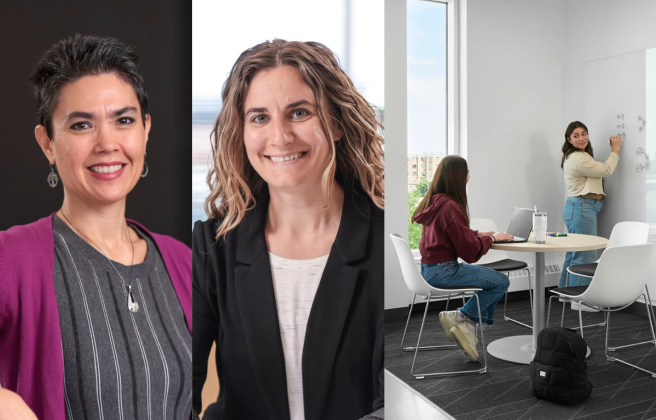
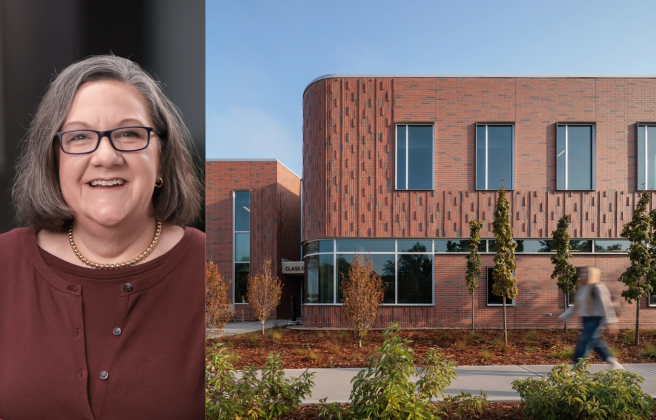
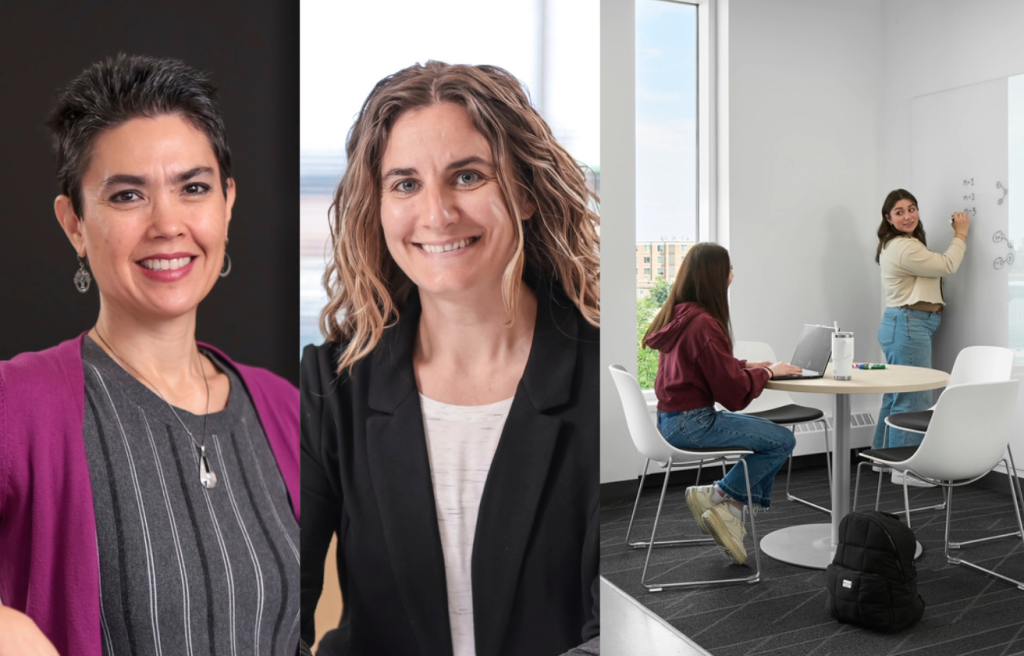
In this episode of Side of Design, we sat down with Senior Project Manager Andrea Cecelia and Marketing Manager Danielle Hilmo to chat about their deep commitment to outreach in their communities, the innovative new lenses students are bringing to design, and what it means for the future of the industry.
Sparking Interest Early
As a project manager, Andrea helps projects move forward from the early pursuit stage to completion, working closely to coordinate with design teams, project partners, and client stakeholders. “I am an architect, but I like to tell people I no longer draw lines,” she says. “I don’t design the project, I design the process now.”
Andrea began volunteering in her children’s classrooms when they started elementary school, but as the kids got older, the need for parent volunteers decreased. Her passion for volunteering, however, hadn’t waned, so she offered to come in and speak about architecture. “I built a series of four classes where I talked about something in design.” she explains. “One day I brought in a bunch of recycled materials and just let them build and explore.”
Her proposal to speak to one classroom morphed into more. “From reading books to second graders about architecture and design, to a city building design activity with fourth graders every year, to designing your own house with fifth graders, to talking to a sixth-grade innovation class about structure and then the profession of architecture,” Andrea’s efforts have expanded across schools and age groups.
Hands-On Experience in High Schools
Danielle’s 25+ years at BWBR have brought her a deep understanding of the architecture, engineering, and construction industry. “Mostly I’m in the pursuits world, that final step before we get a project. It’s writing very custom proposals, coaching up our teams on interviews,” she says. “I always say that I can impersonate an architect.”
Since 2017, Danielle has shared her knowledge through the ACE Mentor Program, “a national program in 37 states across the country for high school students,” she explains. The program runs annually for 16 weeks, with after-school sessions where teens can gain hands-on experience in design and construction from mentors in the profession.
The students are guided through every aspect of the design process with a team, completing a project and presenting it to a panel of judges with the opportunity of earning scholarships. “They’re usually one to five thousand dollars per student, multiple students can get them, and you can apply for a scholarship every year you’re in the program, so you can get up to four scholarships,” Danielle shares. Along with gaining experience in design fields, students develop an understanding of working a professional job by spending time in our BWBR office and interacting with staff.
Making a Difference in Communities
Bringing architecture into schools opens doors for students who may have never considered a future in design, offering both inspiration and a clear pathway forward. Programs like ACE not only introduce students to the industry but can also equip them with the confidence they need to succeed in higher education.
“98% of kids in ACE go to college, and a high majority of those kids felt more confident about applying to college and thinking they would be successful in college,” Danielle says. “A lot of the students that are served by this program are from underrepresented groups. And that is one thing that really drives me and gives me a lot of passion for the program, because there are not enough people of color and not enough women in architecture and engineering.”
Andrea emphasizes that anyone can be an architect—no matter their skillset. “I make a point to say you don’t have to be good at math, you don’t have to be good at drawing, you have to love what you’re doing and be inspired by it,” she says. By breaking stereotypes about what architects look like, Andrea hopes to expand young students’ beliefs about what they can be. “By diversifying the profession, we start to understand different perspectives from different people. It works its way up from early years and your culture to where you get your schooling and the way you think about architecture. It’s so important for all of us to bring in all those different perspectives because architecture effects everyone.”
Learning By Teaching
Danielle and Andrea both agree that mentoring is a powerful tool for their own growth—not only in their careers, but in their personal lives too.
“Working with other professionals who have the same passions is immensely powerful. And there are opportunities for me to be mentored by other mentors, both professionally and just as a person who makes an impact,” Danielle says.
Andrea shares that her work with students has helped her expand her skillset. “I’ve learned so much about myself and what I can do that it’s actually brought more confidence when I interview or speak to clients,” she says. “I don’t have to be an expert on everything, but it’s brought the confidence to be myself. Working with students, you’re not going to get judged on saying the wrong thing, because I tell them, there’s no right or wrong answer in your design.”
The two agree that working with students helps broaden their own perspectives and boost their creativity. “Let’s think differently about this, let’s get inspired, let’s enjoy what we’re doing and not get lost in the monotony of our everyday work,” Andrea says.
Starting Small
Danielle emphasizes that you don’t need decades of experience to get involved—young, emerging professionals have just as much to offer to the next generation. “You don’t have to know how to teach, you don’t have to have a lot of experience around kids, you just have to come with an open mind and have empathy for the people around you. You just need to be interested,” she says.
Andrea agrees, “Even if there’s a kernel of passion, explore it because you don’t know whose life you might impact. You know, it only takes one person.” Whether it’s a classroom visit, an after-school program, or a single conversation, those moments of connection can shape the future of design.
Today’s students are asking new questions, challenging traditional approaches, and bringing fresh ideas that push the industry forward in meaningful ways. For BWBR, investing in mentorship isn’t just about giving back—it’s about building a stronger, more inclusive, and more innovative future. By nurturing curiosity early and supporting students as they explore their potential, we can help design evolve in ways that reflect the communities it serves.